What is UX and Why It Directly Impacts Your Website Sales

UX — User Experience, or User Experience — is often reduced to “the site needs to be beautiful.” In practice, UX is everything that determines whether a visitor understands what you offer, trusts your company, and takes the action you want them to take. Beautiful design that confuses the user is bad UX. Simple design that converts is well-done UX.
In this guide, you will understand what UX really means in the context of a company website, how it affects sales in a measurable way, and what the most impactful elements are — those you can check on your site right now.
What is UX (User Experience)
User Experience is the set of perceptions, emotions, and behaviors that a person has when interacting with a digital product — in this case, your website. It’s not just visual: it includes loading speed, content clarity, ease of navigation, action feedback, and the overall feeling that the site “works” effortlessly.
Jakob Nielsen, one of the founders of the UX discipline, defines it this way: “UX encompasses all aspects of the end user’s interaction with the company, its services, and its products.” In practice for a company website: did the visitor find what they were looking for? Did they understand the value proposition? Were they able to get in touch without friction?
If the answer to any of these questions is “no” or “with difficulty,” there is a UX problem — and this problem has a direct cost in lost leads and unmade sales.
Why UX Directly Impacts Sales
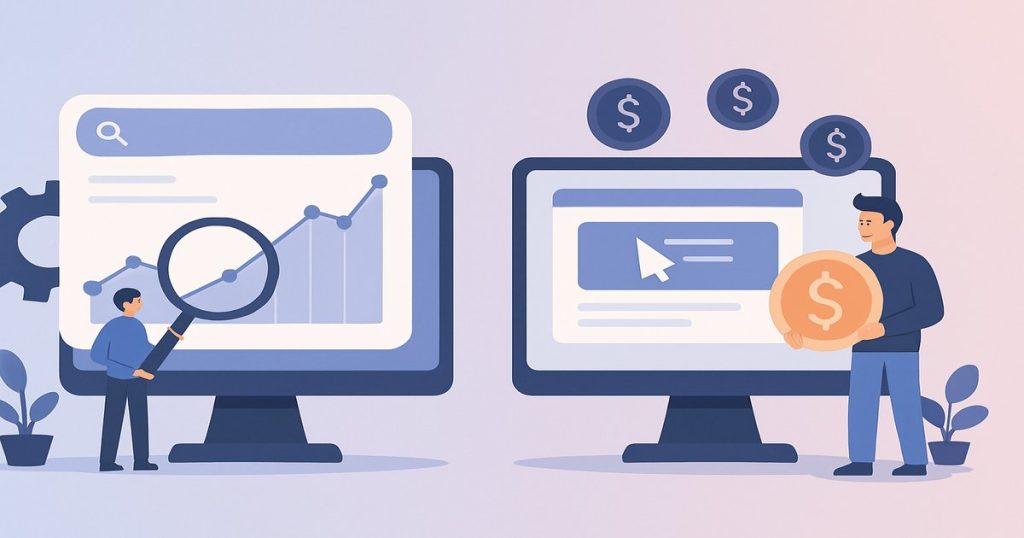
The connection between UX and sales is direct and measurable by the conversion rate. The conversion rate of a website is the percentage of visitors who take the desired action — filling out a form, calling, making a purchase.
A website with 1,000 visits per month and a conversion rate of 1% generates 10 leads. The same website, with UX improvements that raise the conversion to 3%, generates 30 leads — without increasing a penny in traffic investment. Tripling leads with the same budget is the real impact of well-applied UX.
Forrester Research studies indicate that every R$ 1 invested in UX returns R$ 100 in results — a ratio that no other marketing channel can consistently replicate. This is because UX improves the results of all other channels: SEO, paid traffic, social media — all bring traffic, but the site converts that traffic.
The 5 UX Elements with the Greatest Impact on Results
1. Clarity of Value Proposition
The visitor must understand in less than 5 seconds what you do, for whom, and what the main benefit is. This is the most important UX test — and where most company websites fail.
Vague titles like “Digital Marketing Solutions” communicate nothing specific. “Google Ads Management for health clinics in Joinville that want more patients” is clear, specific, and immediately qualifies the visitor.
Practical test: show your website’s homepage to someone who doesn’t know your company. After 5 seconds, ask: “What does this company do? For whom? What’s the next step?” If the answers are vague, the value proposition needs work.
2. Visual Hierarchy
Visual hierarchy is the organization of page elements so that the user’s eye follows a natural path — from the most important to the least important. Without hierarchy, the visitor doesn’t know where to look, and attention disperses.
In a well-structured service page, the typical hierarchy is: value proposition (large and clear H1) → main benefits → social proof → how it works → CTA. Each section addresses a progressive objection: “What is it?” → “Why should I want it?” → “Have others done this?” → “How does it work?” → “What do I do now?”
3. Loading Speed
Speed is UX. A website that takes 5 seconds to load loses, on average, 38% of visitors before displaying any content. Each additional second of loading reduces the conversion rate by approximately 7%.
For company websites focused on conversion, the LCP (Largest Contentful Paint) should be below 2.5 seconds. See how Google measures and penalizes slow sites in the guide on Core Web Vitals.
4. Clear and Properly Positioned CTAs
CTA (Call to Action) is the element that tells the visitor what to do next: “Request a quote,” “Talk to a specialist,” “Buy now.” The most common mistake is having generic CTAs (“Learn more”), hidden in the footer, or absent in sections where the user is most engaged.
Best practices for CTAs that impact conversion:
- Specific and benefit-oriented: “I Want More Patients” converts more than “Get in Touch.”
- Visible above the fold: the first CTA should appear without the user needing to scroll the page.
- Repeated in decision sections: after each block of content that addresses an objection, a CTA. Don’t force the user to go back to the top to act.
- Visual contrast: the CTA button should have a color and size that stand out from the rest of the page — it should not blend into the design.
5. Mobile Experience
More than 60% of traffic to local service websites comes from mobile devices — and this number is even higher for searches with immediate contact intent (“dentist joinville,” “plumber near me”). A website that works well on desktop but is difficult to use on mobile is losing most of its potential customers.
Mobile-first in UX means: buttons large enough for touch (minimum 44x44px), readable text without zoom (minimum 16px), forms with fields that activate the correct keyboard (numeric for phone, email for email), and a clickable phone number that opens direct dialing.
UX and SEO: The Direct Connection
Poor UX harms SEO in two ways:
- Negative behavioral signals: Google observes behavior — high bounce rate, low session time, and quick return to search results (pogo-sticking) are signs that the page did not satisfy the user. Pages with these patterns progressively lose positions.
- Core Web Vitals: Google uses speed and visual stability metrics (LCP, INP, CLS) as a direct ranking factor. Slow or unstable UX is penalized in organic ranking.
Improving UX has a dual effect: more conversions from current traffic + improvement in organic positions that generates more traffic. It is the website improvement with the highest compounded ROI.
How to Evaluate Your Website’s UX Today
Free tools to start the diagnosis:
- Google Analytics 4: bounce rate per page, average engagement time, and behavior flow show where users abandon the site.
- Google Search Console: CTR per page and average position indicate whether the problem is attracting visits (SEO) or converting visits (UX).
- PageSpeed Insights: speed diagnosis with real user data and a list of priority improvements.
- Hotjar (free plan): heatmaps showing where users click and how far they scroll the page — reveals which sections no one reads and which CTAs no one sees.
- 5-second test: show the page to someone who doesn’t know the business and ask them to describe what the company does after 5 seconds of viewing.
Signs of Poor UX That Cost Customers
- Bounce rate above 70% on service pages — users arrive and leave immediately.
- Average session time below 30 seconds — no one is reading the content.
- Contact form with more than 5 fields — each additional field reduces the completion rate.
- Non-clickable phone number on mobile — direct loss of contacts who prefer to call.
- Menu with more than 7 items — cognitive overload that paralyzes decision-making.
- Absence of social proof (reviews, testimonials, clients) — lack of trust that prevents conversion.
- Homepage that does not answer “what do you do” in 5 seconds.
The discipline of systematically identifying and correcting these problems is called CRO — Conversion Rate Optimization. It is what transforms a traffic-generating website into a customer-generating website.
To create a website with structured UX from the ground up, learn about the Focofy website creation service.
Conclusion
UX is not about making the site beautiful — it’s about making the site work for those who visit. Visual beauty is a consequence of good UX, not the goal. The goal is for the visitor to quickly understand what you offer, trust that you can help them, and be able to reach out without friction.
Improving UX is the investment with the highest return on websites that already have traffic: without increasing the ad budget or content production, a conversion improvement from 1% to 3% triples the leads generated by the same visitors.
Want a diagnosis of your website’s UX? Access the complete guide at Website Creation or talk to our team for a free analysis.